
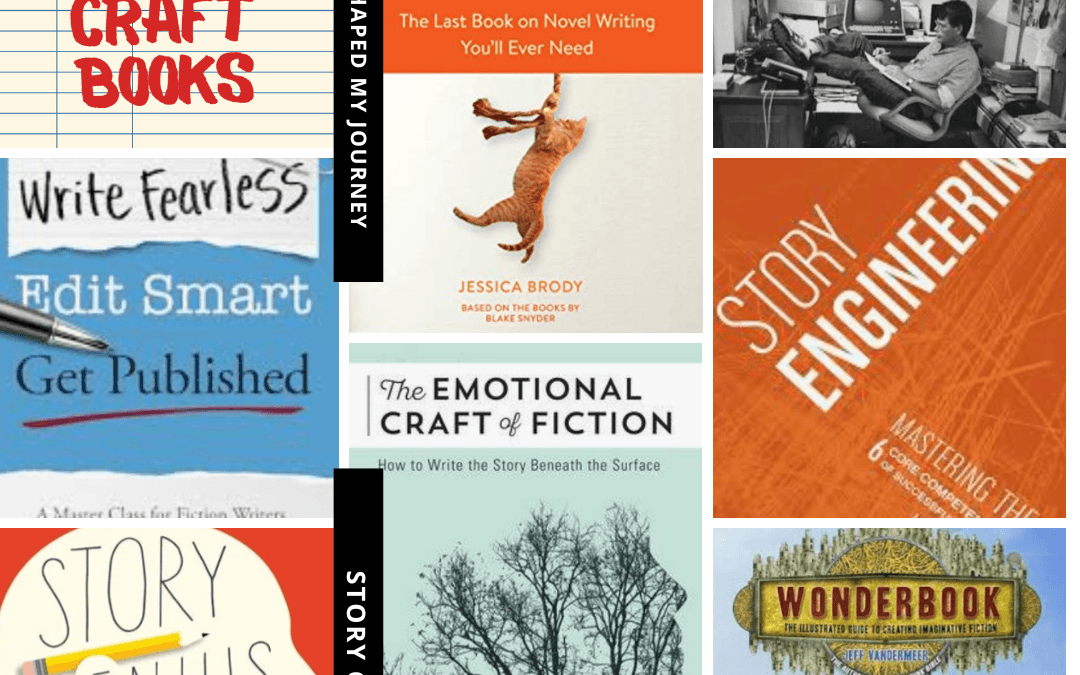
When I first picked up Story Genius by Lisa Cron, I was in the middle of an intense season of studying story structure. My critique group and I were learning to think like engineers, dissecting manuscripts with terms like Midpoint, First Plot Point, and character arc.
At the same time, I was receiving another kind of feedback.
The same comments kept surfacing in critiques:
“She lacks agency.”
“What’s her motivation in this scene?”
“I’m not sure I understand her goals.”
“Why on earth would she do this?”
Looking back, they were absolutely right.
For years, I approached storytelling from the outside in. I naturally gravitated toward plot, worldbuilding, pacing, and structure. I could usually tell you what exciting thing happened next. What I couldn’t always explain was why the character would choose that path in the first place.
My stories had strong skeletons, but sometimes the people walking around inside them felt suspiciously like paper dolls.
Around that time, I picked up Story Genius. While Story Engineering had taught me how stories are built, Lisa Cron was asking an entirely different set of questions:
- Why does your protagonist believe what they believe?
- Why do they make the choices they make?
- What internal logic drives every action on the page?
Her answer becomes the foundation of the entire book.
One of Cron’s core concepts is the idea that every protagonist carries a deeply held belief about how the world works. Often, that belief is incomplete, outdated, or simply wrong. She calls these beliefs “misbeliefs.”
According to Cron, plot doesn’t become meaningful because exciting things happen. Plot becomes meaningful because events force a character to confront the belief system they’ve built their life around.
That idea resonated with me, even if it didn’t immediately revolutionize my writing process the way Story Engineering did.
Some writing books feel like lightning strikes. You read them and suddenly everything changes.
Story Genius wasn’t that kind of book for me.
Instead, it has been more like slow groundwater. Its ideas have filtered into my writing little by little, showing up one critique, one revision, and one manuscript at a time.
What New Writers Can Learn From This Book
If you’re a newer writer, the biggest lesson from Story Genius is that compelling stories aren’t driven solely by events.
Readers don’t just want to know what happens next.
They want to know why it matters.
Cron encourages writers to look beyond a character’s external goal and dig into the deeper emotional forces driving their decisions. Every choice a protagonist makes should make sense through the lens of their experiences, fears, assumptions, and desires.
The book is particularly useful for writers who:
- Struggle to make characters feel emotionally consistent.
- Have difficulty connecting backstory to present-day decisions.
- Receive feedback about weak character motivation or agency.
- Find themselves writing scenes that advance the plot but feel emotionally flat.
- Prefer discovery writing and want a way to deepen character development without relying on strict outlines.
Even if you don’t adopt Cron’s entire methodology, learning to ask why a character makes a choice can dramatically strengthen your storytelling.
The Tools I Gained From Reading This Book
While Story Engineering had the bigger impact on my overall writing process, Story Genius gave me several tools that continue to influence my work today.
Understanding Character Misbeliefs
Cron’s concept of the “misbelief” gave me a more concrete way to think about character arcs.
Instead of simply asking what a character wanted, I started asking:
What false belief are they carrying into the story?
And then:
What experiences will force them to challenge that belief?
Those questions helped me create character growth that felt more organic and purposeful.
Strengthening Character Agency
This was probably the biggest practical takeaway for me.
When critique partners asked why a character did something, I often realized the answer was, “Because the plot needed her to.”
Story Genius pushed me to reverse that thinking.
Instead of moving characters through the plot, I began looking for ways to let the character’s beliefs and desires generate the plot.
I’m still a plot-forward writer, but my protagonists now make more active choices instead of simply being carried from one event to the next.
Connecting Backstory to Present Action
The book also changed how I think about backstory.
Backstory isn’t just information about what happened before page one.
Backstory is causality.
The experiences that shaped a character’s worldview should continue influencing every major decision they make throughout the story.
Creating Emotional Cause and Effect
One lesson that has continued to stick with me is Cron’s emphasis on emotional consequence.
Every scene should leave the protagonist slightly changed. They learn something, misinterpret something, reinforce an old belief, or begin questioning it.
That shift then influences the next decision they make.
Over time, that chain of emotional cause and effect creates a story that feels inevitable rather than random.
My Final Takeaway
If Story Engineering taught me how to think like a structural engineer, Story Genius taught me how to think like a psychologist.
Larry Brooks helped me understand the blueprint.
Lisa Cron helped me understand the person living inside the house.
For my particular brain, the structural lessons of Story Engineering were the bigger breakthrough. Plot and structure were problems I could immediately see and solve. Character motivation was a subtler weakness, one that often revealed itself only after my critique partners started asking uncomfortable questions.
- Why would she do this?
- What does she want?
- What’s driving this choice?
Those questions forced me to confront a weakness in my own process. I was writing plot first and character second, and it showed.
I still consider myself a plot-forward writer. That’s probably never going to change. But thanks in part to Story Genius, my characters now have considerably more agency than a paper doll being dragged from one plot point to the next.
And while that lesson arrived more slowly, it may have been exactly what I needed to hear.
‘Writing Craft Books That Shaped My Journey‘ is an ongoing series exploring the books that helped me grow from an aspiring writer into a working storyteller. Each post examines one book, the lessons it taught me, and where it fits in a writer’s development. You can find earlier posts on ‘Save the Cat’ here, Stephen King’s ‘On Writing”, here, and ‘Story Engineering’ by Larry Brooks, here.
Let’s add to our Playlist. I have an idea for a fun exercise!
Here’s a few songs with strong Plot-First lyrics:
Battle of New Orleans – Nitty Gritty Dirt Band
The Devil Went Down to Georgia – Charlie Daniels Band
El Paso – Marty Robbins
Wreck of the Edmund Fitzgerald – Gordon Lightfoot
Independence Day – Martina McBride
(What can I say? Country music has a strong tradition of storytelling.)
And here’s a few songs with Character-First lyrics where the character is confronting their past like a good Lisa Cron exercise:
Because of You – Kelly Clarkson
She Used to Be Mine – Sara Bareilles
Fight Song – Rachel Platten
Mean – Taylor Swift
The House that Built Me – Miranda Lambert (This is tricky, because it FEELS like a story, but it’s all about the singer’s backstory that she’s trying to reclaim.